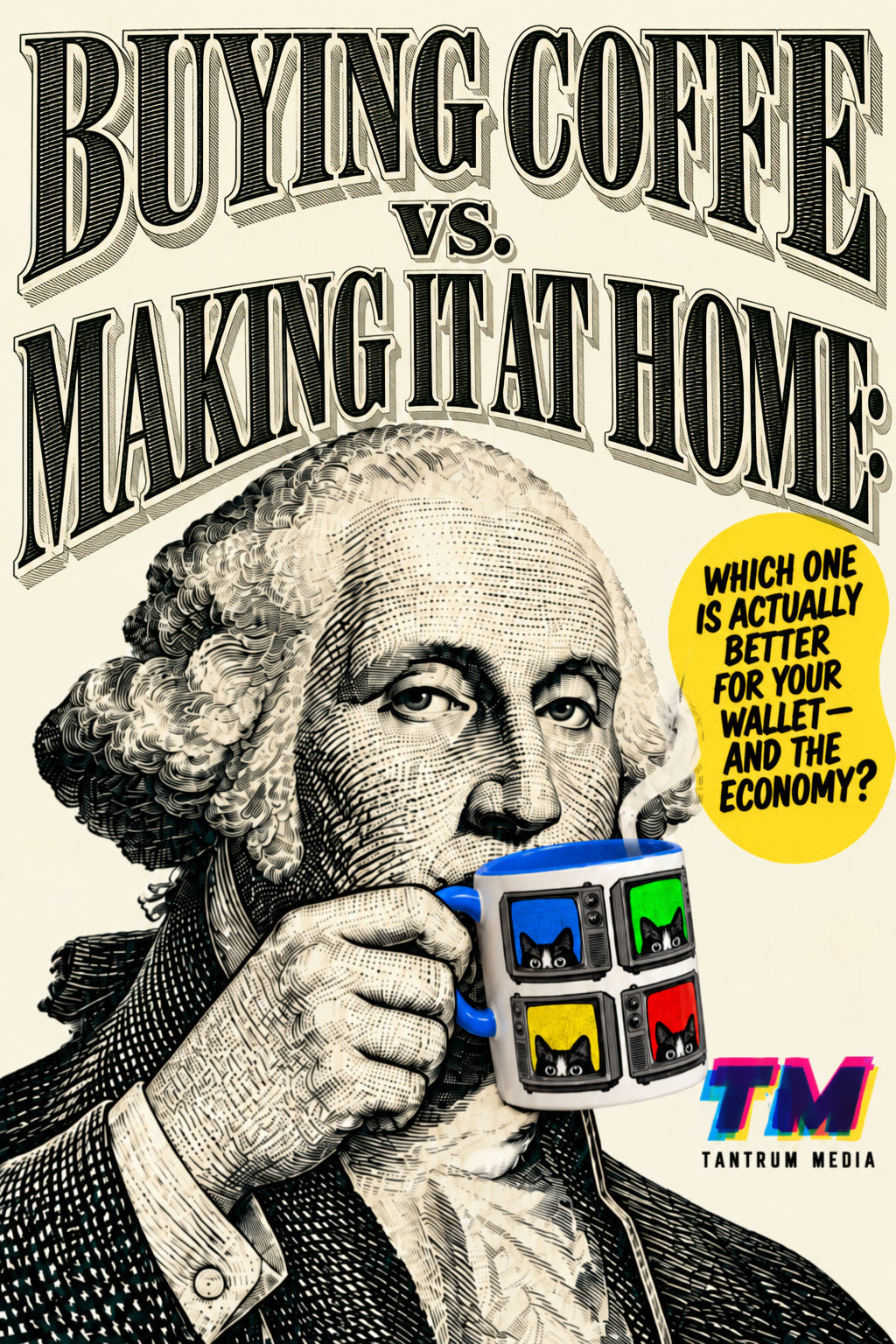
Buying Coffee vs. Making It at Home: Which One Is Actually Better for Your Wallet, and the Economy?
Buying Coffee vs. Making It at Home: Which One Is Actually Better for Your Wallet, and the Economy?
Couldn't load pickup availability
Coffee is caffeine, routine, social life—and increasingly part of the look. But once you count what buying it out and making it at home really cost, which habit actually makes more sense?
At some point, coffee stopped being just coffee.
It became the thing in your hand on the subway, on the way to class, walking into work, meeting friends—and apparently even walking into job interviews, where an iced coffee can now trigger an entire argument about professionalism, age, and whether carrying a drink somehow says anything meaningful about the person holding it.
For Gen Z, millennials, and the generations right behind them, the coffee-shop drink is part caffeine, part routine, part social life, and sometimes part of the look. Which makes the old “just make it at home and save money” advice feel a little too simple.
Buying Coffee vs. Making It at Home: Which One Is Actually Better for Your Wallet—and the Economy? looks at the full cost of both habits, including equipment, ingredients, waste, convenience, time, labor, spending, and what happens to the money you do—or don’t—hand over at the counter.
Because the café cup obviously costs more. The more interesting question is whether it actually costs more once everything is counted, and whether the choice that works best for your own wallet is also the one that makes the most economic sense for everyone else.
Digital PDF • Instant Download
Part of the original Tantrum Media Magazine Editorials collection.
Also part of our Mugs & Drinkware Collection, where the coffee comes with opinions.
Get your thoughts out of the closet.